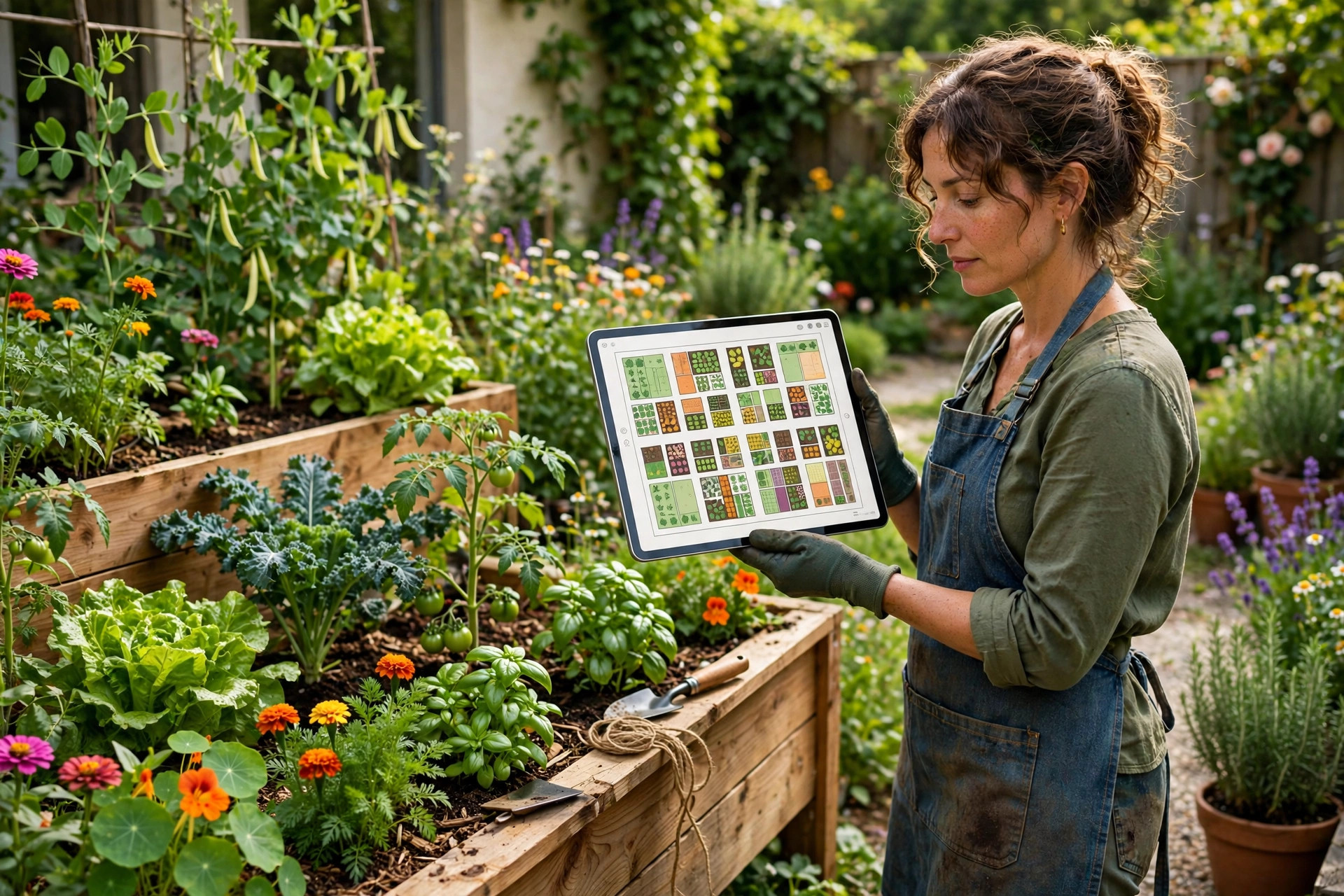
Gardeners juggle planting calendars, pest problems, client quotes and the weather — often before breakfast. These seven copy-paste AI prompts for gardeners turn ChatGPT, Claude or Gemini into a knowledgeable assistant that plans beds, diagnoses sick plants and writes client messages in seconds. Paste each prompt, fill in the brackets, and check the advice against your own experience before you act on it.
How to Use These AI Prompts for Gardeners
Give the AI the facts it needs: your location and hardiness zone, soil type, sun exposure and the season. Vague prompts get vague answers. Pair the prompts with a plant ID app — PictureThis identifies plants and diagnoses disease from a photo (Pro $39.99 a year), while Pl@ntNet is a free, science-backed identifier — and always double-check plant advice before you spray or prune.
1. Build a Seasonal Planting Plan
A good planting plan matches plants to your soil, light and frost dates. This prompt builds one you can hand to a client or follow yourself.
Act as an experienced gardener. Build a planting plan for a [size] garden in [town/country, USDA zone or UK hardiness zone] with [soil type, e.g. clay] soil and [sun exposure, e.g. full sun]. I want [vegetables/flowers/herbs] for [season]. List what to sow or plant each month, spacing, expected harvest or flowering times, and companion plants that help each other. Flag anything that will struggle in my conditions.Use it for: client garden plans, allotment layouts and seasonal work schedules.
2. Diagnose a Sick Plant from a Description
Yellow leaves, spots, wilting — the symptoms all look alike until you describe them properly. This prompt turns your notes into a shortlist of causes.
My [plant name] has [describe symptoms: yellow leaves, black spots, wilting, holes, white powder]. It is planted in [soil/pot], gets [sun hours] of sun, and I water it [frequency]. The weather lately has been [conditions]. List the three most likely causes in order, how to confirm each one, and the safest treatment to try first. Warn me if any treatment could harm nearby plants or pets.Use it for: quick triage on site, before you reach for a spray.
3. Write a Clear Client Quote in Minutes
Quoting takes time, and vague quotes cause arguments. This prompt drafts a professional quote a client can actually understand.
Write a professional garden maintenance quote for a client in [town]. The job is [describe: weekly lawn mowing, hedge trimming, weeding and seasonal planting] for a [size] garden, [frequency] visits, at [rate] per visit. Include what is covered, what is excluded, materials supplied, payment terms and a 30-day validity note. Keep it friendly, clear and under 200 words.Use it for: regular maintenance quotes, one-off clearances and seasonal tidy-ups.
4. Plan a Low-Maintenance Garden for a Busy Client
Many clients want a beautiful garden they barely have to touch. This prompt designs one around their climate and the time they actually have.
Design a low-maintenance garden for a [size] plot in [location/zone] with [sun exposure]. The client can spend [hours] per week on upkeep and wants [flowers/evergreen structure/a small vegetable patch]. Suggest plants that need little watering or pruning, a simple mulching and watering routine, and one seasonal task per month. Avoid plants known to be invasive in this area.Use it for: design consultations and winning clients who fear high upkeep.
5. Turn a Garden Photo into a Redesign Idea
Clients often cannot picture a change. Describe the space to the AI and get a redesign direction you can sketch or render for them.
Here is my client's garden: [describe size, shape, sun, existing features, problems]. Suggest a redesign with three zones: [e.g. seating, planting, play]. Recommend plants, materials and a focal point for each zone, with rough costs in [currency]. Keep the style [modern cottage/wildlife-friendly/minimal] and note anything that needs a professional, like drainage or retaining walls.Use it for: first-draft redesigns, which you can visualise in iScape (Pro $29.99 a month) before presenting them.
6. Create a Watering and Feeding Schedule
Overwatering kills more plants than drought. This prompt builds a schedule matched to your plants, soil and season.
Build a watering and feeding schedule for these plants: [list plants]. They are in [pots/beds], in [soil type], in [location/zone], during [season]. Tell me how often to water each one, how much, the best time of day, and when to feed and with what. Add a note on what to change if it rains heavily or turns very hot.Use it for: client care sheets, holiday watering instructions and your own rounds.
7. Write a Friendly Seasonal Message to Clients
A short seasonal note keeps you in clients' minds and books the next job. This prompt writes one that sounds like you, not a flyer.
Write a friendly seasonal message to my gardening clients for [season]. Mention one useful tip for their gardens this month, remind them to book [service, e.g. autumn tidy-ups] before slots fill, and invite them to reply with any garden questions. Keep it under 100 words, warm and personal, with UK spelling.Use it for: seasonal emails, WhatsApp broadcasts and social posts.
AI Tools That Pair Well With These Prompts
The prompts work in any chatbot, but a few apps make them stronger. Planta sends watering reminders and diagnoses plants from photos (Premium from $35.99 a year), Planter lays out vegetable beds with spacing and companion planting (free for one garden), and GrowVeg handles crop rotation and sowing reminders ($35 a year). For sowing dates built from your frost dates, Seedtime is free. Save the prompts that work and reuse them — by the end of a season you will have a personal toolkit that makes every job faster.
Pro Tip: Keep a Prompt Notebook
Save these seven prompts in a notes app with your real examples filled in — your zone, your soil, your rates. Each time a prompt saves you half an hour of planning or quoting, note it. A gardener with a good prompt library quotes faster, plans better and spends more of the day actually gardening.
Related guides on NextGenAIVibe
- 7 AI Prompts for DJs: Daily Pack 2026
- 7 AI Prompts for Illustrators: Daily Pack 2026
- 7 AI Prompts for Spa Owners: Daily Pack 2026
Tags: #AIPrompts #Gardeners #AITools #ChatGPT #Gardening #Productivity #PlantCare #AIAssistant

Comments (0)