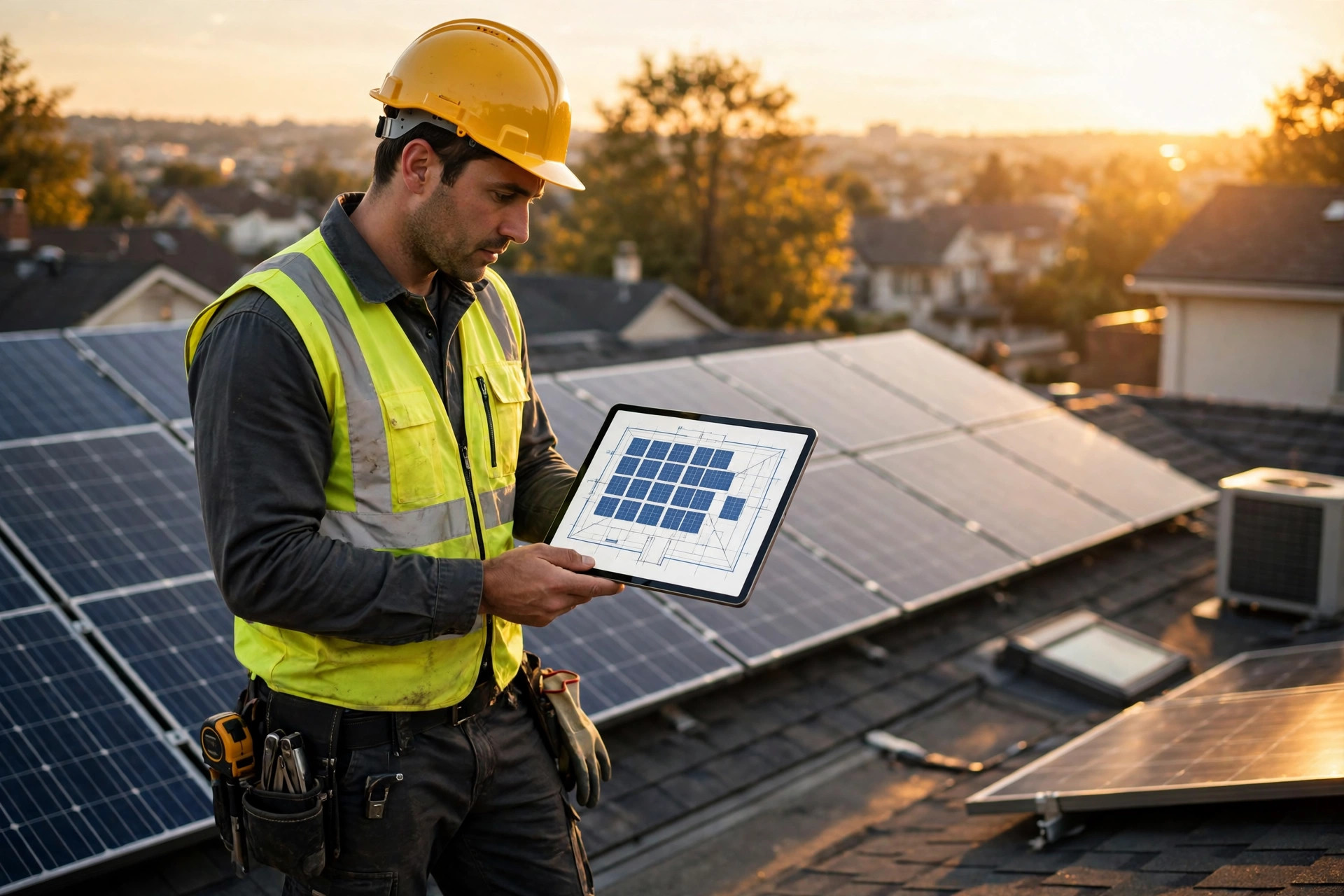
Solar installers juggle lead replies, roof designs, site surveys, proposals and permits — often in the same afternoon. These seven copy-paste AI prompts turn that admin pile into minutes of work, so you can spend more time on roofs and less time on keyboards. Paste each one into ChatGPT, Claude or Gemini, fill in the brackets, and review the output before it goes anywhere near a customer.
1. Reply to New Leads in Minutes
Solar leads usually contact several installers at once, so the fastest helpful reply often wins the job. Use this prompt the moment a web enquiry lands.
You are the office manager of a residential solar installation company. Draft a friendly reply to this new lead: [paste the enquiry]. Ask for a photo of their latest electricity bill and the best time for a 10-minute call. Explain that we can design a preliminary system from satellite imagery before anyone visits, and that a site survey confirms the final design. Keep it under 120 words, warm and professional, no sales pressure.Use it for: first replies to web forms, Facebook messages and WhatsApp enquiries.
2. Turn an Electricity Bill into a System Size
A customer’s bill tells you almost everything about the system they need. Feed the numbers to AI and get a plain-English sizing summary you can quote from.
Act as a solar design consultant. A homeowner in [town/city] used [annual kWh] last year and pays [rate per kWh] with [utility name]. Their roof faces [direction] with [any shading notes]. Suggest a suitable system size in kW, an estimated annual production figure, and a one-paragraph plain-English explanation of how the system would cut their bill. State clearly that these are estimates to be confirmed by a site survey, and do not invent incentive figures.Use it for: same-day preliminary quotes from a bill photo or a usage figure.
3. Write a Proposal Homeowners Actually Understand
Most proposals drown customers in jargon. This prompt rewrites your numbers into a clear, honest summary that is easy to sign.
Rewrite this solar proposal summary for a homeowner with no technical knowledge: [paste system size, panel count, estimated annual production, total cost, expected bill savings and payback period]. Use short paragraphs and simple language. Explain net metering in two sentences using [utility name]'s rules: [paste the rules]. List every assumption used, and add one line stating the production figure is an estimate. Do not add any incentive or tax credit that is not listed here.Use it for: the customer-facing introduction on every proposal you send.
4. Plan a Site Survey That Misses Nothing
A good survey catches roof condition, rafter spacing, panel capacity and shading the satellite imagery missed. Let AI build the checklist.
Create a site survey checklist for a residential solar install at a [detached/semi-detached/terraced] home with a [pitched/flat] roof, built around [year]. Cover roof condition and age, rafter size and spacing, main panel capacity, cable routes, shading from trees and neighbouring buildings, and access for scaffolding. Format it as a tick-box list with a notes column, plus three questions to ask the homeowner on the day.Use it for: every survey visit — print it or open it on your phone on the roof.
5. Draft Permit and Interconnection Narratives
Permit packets need the same written explanations again and again. AI can draft them from your design details while you keep a checklist per council or utility.
Using these design details — [system size, panel model, inverter model, roof layout summary, expected annual production] — draft the written narrative for a solar permit application in [council/utility area]. Keep it factual and concise, in plain professional language, and end with a bullet list of the documents attached. Do not invent regulations or approval timelines.Use it for: permit narratives, interconnection forms and council submissions.
6. Follow Up After the Install
A short check-in after handover earns reviews, referrals and maintenance work. This prompt writes one that sounds like you, not a template.
Draft a short follow-up message to a customer whose [system size] solar system was installed [number] weeks ago. Ask how the system is performing, remind them the monitoring app shows live production, and invite them to leave a review if they are happy. Mention our maintenance service in one sentence. Warm, personal tone, under 100 words.Use it for: post-install check-ins by text, email or WhatsApp.
7. Explain the Savings in Plain English
Customers remember the explanation, not the spreadsheet. This prompt turns your figures into a story they can repeat to their partner.
Explain to a homeowner in plain English how their new [system size] solar system saves them money. Their old annual bill was [amount], their estimated new bill is [amount], and the system cost [amount]. Use a simple before-and-after comparison, one everyday analogy, and one honest sentence about what could change the numbers, such as weather or future tariff changes. No jargon, no hype.Use it for: sales calls, handover chats and answers to "is it actually worth it?"
How to Use This Pack Every Day
Save the seven prompts in a shared note or your CRM so the whole team uses the same wording. The golden rule stays the same for all of them: AI drafts, a human checks. Never send a proposal, permit document or price to a customer without reviewing every figure — and never let an old template promise an incentive that no longer exists. Used well, these prompts give a small install team the speed of a much bigger sales operation.
Related guides on NextGenAIVibe
- Calendly vs Cal.com vs Motion: Best AI Scheduling 2026
- 7 AI Prompts for Affiliate Marketers: Daily Pack 2026
- How to Use Lovable in 2026: 7 Steps
Tags: #AIPrompts #SolarInstallers #AITools #SolarEnergy #Productivity #Guides #NextGenAIVibe

Comments (0)