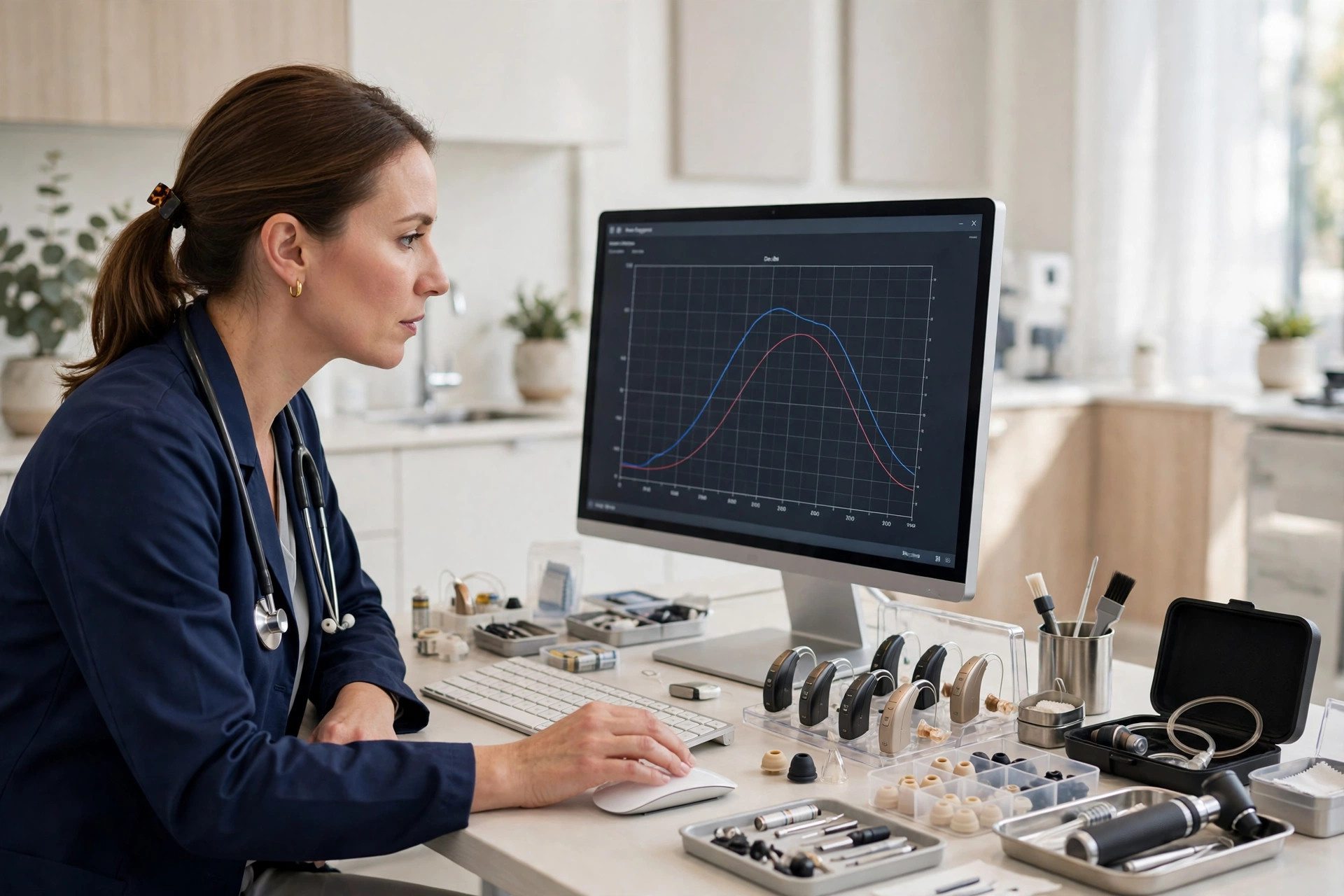
Audiology is data-rich work: audiograms, speech scores, fitting notes, follow-ups and patient messages all compete for the same clinic hour. The best AI tools for audiologists do not replace clinical judgement; they remove repetitive documentation, guide repeatable fitting steps and keep hearing-care records easier to audit.
Best AI tools for audiologists: the shortlist
- Auditdata Manage — Best overall for multi-location clinics. Its AI Notes Assistant is designed to listen during visits and produce structured notes, while NOAH integration and network reporting help standardise workflows across sites.
- Otometrics Aurical IQ — Best guided fitting and verification platform. The step-by-step Guided Workflow and NAL-NL3 support are built to make best-practice fitting easier to follow consistently, especially when clinicians have mixed experience levels.
- Sycle — Best practice-management centre for many small clinics. It is aimed at hearing-care teams that want audiogram management and clinical documentation in one workflow rather than scattered across separate systems.
- Blueprint OMS — Best for operations-heavy practices. It manages patient records and hearing-aid sales, with audiogram management and repeatable report generation for clinics that need tidy longitudinal hearing profiles.
- CounselEAR — Best for report-ready documentation. Its strength is linking the session to the report, helping audiologists keep consistent, structured visit records that are easier to review later.
- SHOEBOX Audiometry — Best portable testing option. It supports portable hearing testing and audiometry workflows for clinics that need consistent audiogram management without expanding into full appointment scheduling.
- NOAH — Best data backbone. NOAH connects hearing-test modules, fitting systems and patient data, helping teams standardise documentation across clinicians and exam rooms.
- Oticon Genie 2 — Best for Oticon-heavy clinics. It supports hearing-aid selection, programming and fitting for Oticon devices, importing audiograms and mapping prescriptive parameters to fitting controls.
- MindEar — Best tinnitus self-management support to discuss with patients. It combines sound therapy, CBT activities, sleep sessions and an AI chatbot called Tinnibot for people whose tinnitus distress affects stress and sleep.
- Oto — Best clinic-guided tinnitus support. It is provided through participating audiology clinics, with calming sounds, CBT-based guided sessions, lessons and progress tracking reviewed with the audiologist.
Best overall for hearing clinics
Best overall: Auditdata Manage. For groups that need consistent notes, NOAH-linked workflows and reporting across locations, it is the strongest starting point. Solo audiologists may get more immediate value from a simpler practice system plus a careful documentation routine, then add guided fitting tools as appointment volume grows.
How to choose hearing clinic software
Start with the bottleneck
If notes are the bottleneck, prioritise structured documentation and report generation. If fitting consistency is the issue, look at guided verification and manufacturer fitting software. If patients struggle between visits, tinnitus and hearing-support apps can help, but they should sit inside a care plan rather than replace assessment, consent checks or follow-up.
Before adopting any AI feature, confirm how recordings, transcripts and patient data are stored, who can access them, and whether your clinic can export records cleanly. That governance step matters as much as the headline automation.
Related guides on NextGenAIVibe
- 10 Best AI Tools for Dental Hygienists 2026: Ranked
- 7 AI Prompts for Speech Therapists: Daily SLP Pack 2026
- 7 AI Prompts for Physiotherapists: Daily Clinic Pack 2026
Tags: #AITools #Audiologists #HearingCare #Audiology #HearingAids #Tinnitus #ClinicSoftware #Productivity
Comments (0)